





4051EP substitute ACM Polymer
ACM-2311C is a copolymer or terpolymer of ethyl acrylate and other acrylates, with a small amount of a vulcanisation-supporting monomer. It is produced by radically initiated emulsion polymerisation or by suspension polymerisation. Curing takes place by means of diamines, fatty acid soaps and peroxides, for example.

- Product Introduction
Crestmat is a leading rubber material and rubber product supplier in China. The factory has been devoted in special rubber compounding for more than 30 years. The products mainly include rubber materials like fluorosilicone (FVMQ), arylate rubber (ACM), Hydrogenated Nitrile (HNBR), fluoroelastomer (FKM) and rubber calendering products such as HNBR sheet, FKM sheet, fluorosilicone sheet and rubber extruded products such as fkm o ring cord, HNBR rubber cord, fkm profile and high quality ffkm oring. The products are widely used in aviation, automobile, petroleum, marine, semi-condutor and many other fields. The rubber compounding factory is well equiped with Japan-made banburies, two-roller mixers, reaction kettle, strainer; the rubber product factory is equiped with Rotocure machine, press machine, extruder. The lab is equiped with Rheometer, Hardness Testor, Elongation Testor, Rotary Viscosimeter, Biochemitry Incubator.
Why Choose Us
Advanced Equipment
The rubber compounding factory is well equiped with Japan-made banburies, two-roller mixers, reaction kettle, strainer; the rubber product factory is equiped with Rotocure machine, press machine, extruder.
Professional Team
FKM material is equiped with 3 production lines, one for precompounds, one for black compounds, one for colorful compounds. The maximum capacity for fluoroelastomer compound and polymer is 4800 tons per year.
Customized services
The rubber compounding factory is well equiped with Japan-made banburies, two-roller mixers, reaction kettle, strainer; the rubber product factory is equiped with Rotocure machine, press machine, extruder. The lab is equiped with Rheometer, Hardness Testor, Elongation Testor, Rotary Viscosimeter, Biochemitry Incubator.
High Quality
In our Reaserch and Development Certer, we have a leading laboratory equiped with a full sets of testing machinary. Here we can develop the new formulations and also test the rheological properties and physical properties for each batch of orders.
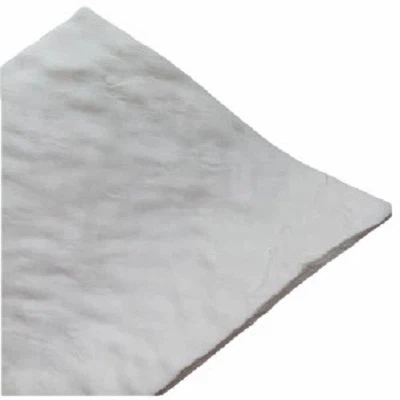
► Excellent resistance to mineral oils
► Excellent resistance to high temperature oxidation

► Density: 0.90~1.10g/cm³.
► Hardness: 30~90 Shore A.
► Tensile strength: 10-20MPa
► Elongation at break: 300-800%.

► 4051EP Alternative.
► Excellent aging resistance.
► Fast curing.
► Low compression set.
► The Tg of ACM-2311C is -18 ℃.
What is ACM-2311C?
ACM-2311C is a copolymer or terpolymer of ethyl acrylate and other acrylates, with a small amount of a vulcanisation-supporting monomer. It is produced by radically initiated emulsion polymerisation or by suspension polymerisation. Curing takes place by means of diamines, fatty acid soaps and peroxides, for example.
ACM is characterised by high oxygen and ozone resistance, thermal stability and good heat and chemical resistance, but it has poor hydrolysis resistance and relatively high water absorption.
ACM-2311C, known by the chemical name alkyl acrylate copolymer (ACM), is a type of rubber that has outstanding resistance to hot oil and oxidation.
Benefits of ACM-2311C
Resistance to oil
ACM has been developed to withstand a constant maximum working temperature of up to 180°C whilst also maintaining resistance to oil. These properties make high temperature polyacrylates suitable for use in automotive automatic transmissions, steering systems, and other applications where petroleum and high temperature resistance are required.
Excellent chemical resistance
ACM has excellent chemical resistance to hot hydraulic oil, ozone and weather exhibiting resistance to cracking when exposed to ozone and sunlight. It has good resistance to aliphatic solvents and sulphur-containing oils.
Has low temperature
ACM has poor compression set performance relative to NBR and lesser water resistance. It has low temperature performance than some other elastomers.
Styrene-Butadiene Rubber (SBR)
Styrene-butadiene rubber is a family of rubber compounds created from a combination of styrene and butadiene. Styrene-butadiene rubber is the most complex and most durable synthetic rubber out of all others. Developed in 1929 by a chemist in Germany, it was predominantly used throughout WW2 for automobile tires and various other rubber products.
Silicone Rubber (VMQ)
Natural silicone (Si) is processed with carbon (C), oxygen (O), and hydrogen (H) to create a synthetic elastomer called silicone rubber. Uncured silicone rubber exists as a liquid and requires vulcanization, curing, and sometimes catalyzation to convert to a solid. Silicone has the most diverse set of material properties of any other rubber.
It has good flame resistance, excellent resistance to chemicals and low temperatures, and significant environmental performance. Fuel and chemical solvents are a big threat to silicone rubbers.
Fluorosilicone Rubber (FVMQ)
Fluorosilicone is a modified form of silicone rubber designed to be long-lasting and stable at extreme temperatures. It is one of the more expensive types of rubber and is sparingly used for general-purpose products.
FVMQ improves on all regular silicone's poor physical properties and abrasion resistance. Its only shortcoming is medium-low gas permeability and ketone.
Nitrile Rubber (NBR)
Nitrile rubber is a synthetic elastomer with increased chemical resistance. It is also called nitrile butadiene rubber, acrylonitrile-butadiene rubber, NBR, and Buna-N and is commercially trademarked under Perbunan, Nipol, Krynac, and European. Nitrile rubber was developed in the 1940s as one of the first oil-resistant elastomers.
Hydrogenated Nitrile Rubber (HNBR)
Hydrogenation is the addition of hydrogen molecules to a compound. HNBR is a product of the hydrogenation of butadiene in Nitrile rubber. Hydrogenation results in higher resistance to oils and chemicals but, more importantly, higher operating temperatures.
HNBR material has the same moderate physical properties, abrasion resistance, and resistance to petroleum oils as NBR.

Acrylic rubber is positioned as cost-effective, and its effect in hot oil environment is similar to that of fluororubber. It is used when nitrile rubber cannot meet the requirements and expensive fluororubber is not wanted. However, its processing performance is poor and there are many problems.
ACM has many defects such as sticking to the stick, sticking to the mold, and contaminating the mold, and it is not resistant to low temperature and poor compression deformation. Therefore, an improved version of acrylic rubber, AEM rubber, was developed to make up for these defects.
Polyethylene/acrylate rubber is a copolymer of ethylene and methacrylate, as mentioned above, with a small amount of carboxylic acid-containing vulcanized monomer. Ethylene/acrylic rubber is a durable, low permanent compression set rubber with excellent high temperature resistance, heat resistance to mineral oil, hydraulic oil and weather resistance. AEM has better low temperature elasticity and mechanical properties than ACM, but it is not resistant to low aniline oil and polar solvents.
Polyacrylate rubber is a saturated polar rubber with good oil resistance. Its oil resistance at room temperature is close to that of nitrile rubber. In hot oil below 150℃, the performance of acrylate rubber is much better than that of nitrile rubber. The physical properties of acrylate rubber, such as tensile strength retention rate, tear strength retention rate, hardness change, etc., are better than those of nitrile rubber. Another outstanding performance of acrylate rubber is that when the sealing part is used in extreme pressure lubricating oil, nitrile rubber will acidify at a temperature above 120℃ and will not play a sealing role, while polyacrylate rubber can be used normally at 150℃. However, it has medium mechanical strength, poor elasticity, poor low temperature resistance (brittle temperature is -12℃), and is easy to hydrolyze.
Applications of ACM-2311C
Due to these properties, you can use ACM-2311C for several functions. For example, you can use the material in laundry machines, roll mills, military tools, aviation machines, and compressors.
Automotive Transmissions
You can use ACM in O-rings, shaft seal rings, covers, oil sump gaskets, and transmission seals because the material has high resistance to fuels such as transmission oil and engine oil. As a result, these oils can't cause as much damage to the seals or the hoses.
The automotive industry involves machines that are exposed to excessive heat and shock. Consequently, those machines require constant oil lubrication. ACM-2311C offers more efficiency because its seals provide oil and heat resistance.
Dentistry and Biomedical Applications
ACM-2311C makes an excellent biomaterial used in ophthalmology. Besides, you can use the material to manufacture gloves required for medical use. You can safely use the gloves for hospital care since acrylic rubber isn't highly reactive.
Vibration Damping
ACM-2311C also works well as a damping material. The material offers significant resilience to rebound; hence, it absorbs the sound particle vibrations and converts them to other forms of energy. You can apply this feature in auditoriums, concert halls, and cinema halls, where you must consider acoustics.

What Is ACM-2311C Material?
Generally, ACM-2311C is gotten from a process known as polymerization where monomers of the acrylate material are combined. These monomers are compounds that have the acrylate group in them, and their synthesis and combination in a controlled environment leads to the rise of the ACM-2311C material.
In terms of its chemical structure, ACM-2311C derives its form from the primary acrylate monomer, which itself is derived from acrylic acid as well.
That said, it is also worth noting that some manufacturers tend to copolymerize polyacrylate rubber with other monomers in order to optimize its properties and make it generally more desirable. With that in mind, you can find a few of the following components in the material properties:
Butyl Acrylate (BA)
A monomer, BA generally helps to ensure that the ACM-2311C polymer structure is able to maintain its flexibility even when it's being used in low temperatures.
Ethyl Acrylate (EA)
Besides bolstering the polymer's flexibility in the cold, this component also improves its ability to soak up physical impact.
Acrylonitrile (AN)
If you want your rubber polymer to hold off against oil, then this component is generally required.
Methyl Methacrylate (MMA)
Overall, this component also helps to improve several of the polymer's general physical properties.
ACM-2311C's Chemical Properties
It Holds Off Fuels & Oils
The first thing that makes this material especially attractive to many manufacturers is that it is very resistant to different forms of oils. From hydrocarbons to vegetable oils and more, ACM-2311C does well to hold them at bay.
Optimal Performance In Heat
Another of the most impressive chemical properties of ACM-2311C is the fact that the material exhibits an impressive level of heat resistance. You will find that much of its use is in situations where it will most likely encounter higher temperatures, and ACM-2311C holds its own quite well.
It Can Resist Weather Elements
Weathering doesn't affect ACM-2311C at all. At the same time, the material also exhibits optimal resistance to ozone. As you will imagine, the material can be used outside, even taking up direct contact with the sun and its dangerous rays.
It Is Stable With Chemicals
You get a considerable amount of chemical inertness when it comes to ACM-2311C. When it combines with bases and acids, the material exhibits optimal stability. Now, while this factor will depend on the overall composition of the polymer, it remains a relatively solid option all in all.
Flexibility In The Cold
As we mentioned earlier, polyacrylate rubber can also optimize its flexible properties when it is subjected to overly low temperatures. You can use it in the cold and not have to fear or worry about it becoming too brittle.
Flammability Is Very Low
One of the unique chemical properties of ACM-2311C is that the material resists flames quite well. Combined with its heat resistance, you'll find that the material is quite stable in the presence of elevated temperatures.
It Sets After Compression
Optimal compression set resistance is needed if you have a material that will be subjected to a considerable amount of physical pressure. And on this front, you can rest assured that ACM-2311C will do just fine.
When it comes to synthetic rubbers, there are so many popular options. As you can imagine, both ACM-2311C and nitrile rubber are top on that list. Their properties show that there are similarities between them, but there are also some major lines of distinction. Let's take a look at those.
How They Resist Oils
On this front, both materials are quite even. They both resist oils, making them perfect in instances where this is a major concern. That said, ACM tends to resist a broader oil range – one that includes vegetable oils, mineral oils, and more.
The Temperature Resistance Comparison
Temperature resistance is another area where ACM wins. Nitrile rubber does its best with heat resistance and working in hot conditions, but it doesn't quite come close to ACM.
Performance In Low Temperatures
Both materials do well to maintain their properties in low temperatures. But, when these temperatures become extremely low, ACM-2311C kind of has the edge.
Resistance To Weather Elements
In general, ACM does better to resist elements of weather – including and especially ozone. Nitrile rubber works in outdoor environments too, but when the conditions get very extreme, ACM-2311C pulls through better.
Holding Off Against Contact
In terms of abrasion resistance, nitrile rubber actually does better than polyacrylate rubber. For this reason, the former is much better when you need something to withstand wear and friction.
Our Factory
Crestmat is a leading high performance rubber material and rubber product supplier in China. The factory has been devoted in special rubber compounding for more than 30 years.


FAQ
Hot Tags: 4051EP substitute ACM Polymer, China 4051EP substitute ACM Polymer manufacturers, suppliers, factory, acm rubber, ffkm rubber, fkm products, General Molding Silicone, FFKM O ring, Low temperature Resistance HNBR
You Might Also Like


