





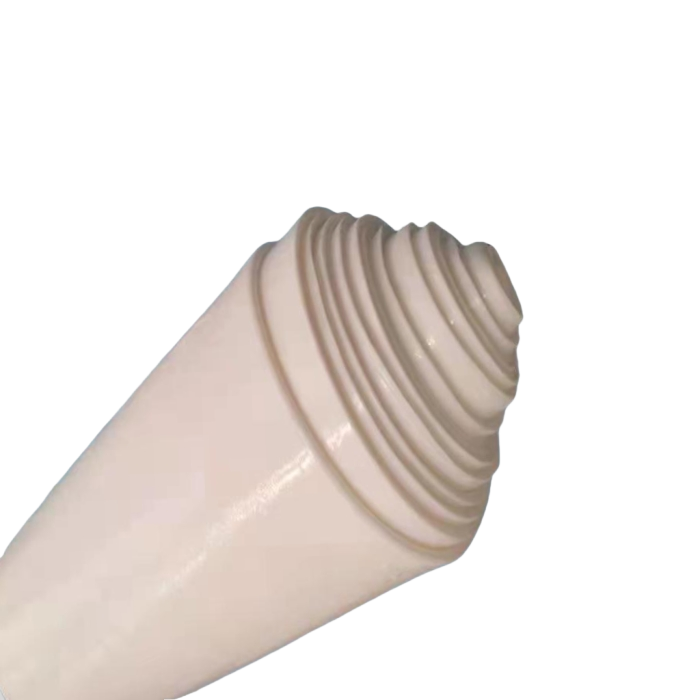

FVMQ Compound
► Excellent low temperature flexibility
► Excellent oil and fuel resistance
► Excellent chemical resistance
► Great mechanical performance

- Product Introduction
Introduction
► Technical Data-For bonding
|
GRADE |
UNIT |
TEST METHOD |
FSM60B |
FSM70B |
|
Appearance |
- |
Visual |
Milky white |
|
|
Hardness |
Shore A |
D2240 |
60±5 |
70±5 |
|
Tensile strength, Die C |
MPa |
D412 |
9.0 |
9.0 |
|
Elongation, Die C |
% |
D412 |
350 |
330 |
|
Tear strength, Die B |
% |
D624 |
22 |
23 |
|
Compression set, 22 h at 177 ℃ |
% |
D395 |
11 |
11 |
|
Δ Volume Fuel C, 72 h at 23 ℃ |
% |
D471 |
17 |
17 |
|
Δ Tensile strength Fuel C, 72 h at 23 ℃ |
% |
D471 |
-20 |
-20 |
|
Δ Elongation Fuel C, 72 h at 23 ℃ |
% |
D471 |
-20 |
-20 |
|
Δ Heat aging tensile Fuel C, 72 h at 225 ℃ |
% |
D573 |
-20 |
-20 |
|
Bonding to VMQ |
kN/m |
- |
2.1 |
2.1 |
► Technical Data-For Extrudion
|
GRADE |
UNIT |
FSM50E |
FSM60E |
FSM70E |
FSM80E |
|
Appearance |
Off-white or translucent |
||||
|
Hardness |
Shore A |
50±5 |
60±5 |
70±5 |
80±5 |
|
Tensile strength Die C |
MPa |
9.2 |
9.3 |
9.4 |
8.1 |
|
Elongation Die C |
% |
337 |
293 |
273 |
173 |
|
Tear strength Die B |
kN/m |
16 |
16 |
17 |
16 |
|
Compression set, 22 h at 177 ℃ |
% |
7 |
8 |
9 |
9 |
|
Δ Volume Fuel C, 72 h at 23 ℃ |
% |
17 |
17 |
17 |
17 |
|
Δ Tensile strength Fuel C, 72 h at 23 ℃ |
% |
-20 |
-20 |
-20 |
-20 |
|
Δ Elongation Fuel C, 72 h at 23 ℃ |
% |
-20 |
-20 |
-20 |
-20 |
|
Δ Heat aging tensile Fuel C, 72 h at 225 ℃ |
% |
-20 |
-20 |
-20 |
-20 |
► Technical Data-Low Compression Set & High Rebound
|
GRADE |
UNIT |
FSM40LC |
FSM50LC |
FSM60LC |
FSM70LC |
FSM80LC |
|
Appearance |
- |
Translucent, Smooth surface, No impurities |
||||
|
Hardness |
Shore A |
40±5 |
50±5 |
60±5 |
70±5 |
80±5 |
|
Tensile strength, Die C |
MPa |
10.2 |
10.2 |
10.2 |
10.2 |
8.9 |
|
Elongation, Die C |
% |
410 |
355 |
332 |
270 |
205 |
|
Tear strength, Die B |
kN/m |
17 |
17 |
18 |
18 |
17 |
|
Compression set , 22 h at 177 ℃ |
% |
6.1 |
6.1 |
6.3 |
6.8 |
6.9 |
|
Resilience |
% |
31 |
32 |
32 |
32 |
32 |
|
Δ Volume , 72 h at 23 ℃ |
% |
-20 |
-20 |
-20 |
-20 |
-20 |
|
Δ Tensile strength , 72 h at 23 ℃ |
% |
-20 |
-20 |
-20 |
-20 |
-20 |
|
Δ Elongation , 72 h at 23 ℃ |
% |
-20 |
-20 |
-20 |
-20 |
-20 |
|
Δ Heat aging tensile , 72 h at 225 ℃ |
% |
-17 |
-17 |
-17 |
-17 |
-17 |
|
TR-10 |
℃ |
-45 |
-45 |
-45 |
-45 |
-45 |
► Technical Data-High Tear Strength
|
GRADE |
UNIT |
FSM40HT |
FSM50HT |
FSM60HT |
FSM70HT |
FSM80HT |
|
Appearance |
- |
Translucent, Smooth surface, No impurities |
||||
|
Hardness |
Shore A |
40±5 |
50±5 |
60±5 |
70±5 |
80±5 |
|
Tensile strength, Die C |
MPa |
11.5 |
11.6 |
11.7 |
9.3 |
8.7 |
|
Elongation, Die C |
% |
483 |
420 |
392 |
322 |
183 |
|
Tear strength, Die B |
kN/m |
41 |
43 |
43 |
35 |
30 |
|
Compression set , 22 h at 177 ℃ |
% |
13 |
14 |
16 |
17 |
20 |
|
Δ Volume , 72 h at 23 ℃ |
% |
+17 |
+17 |
+17 |
+17 |
+17 |
|
Δ Tensile strength , 72 h at 23 ℃ |
% |
-20 |
-20 |
-20 |
-20 |
-20 |
|
Δ Elongation , 72 h at 23 ℃ |
% |
-20 |
-20 |
-20 |
-20 |
-20 |
|
Δ Heat aging tensile , 72 h at 225 ℃ |
% |
-20 |
-20 |
-20 |
-20 |
-20 |
Usage
► Mixing
The compound is first repeatedly mixed on a two-roll mixer. After adding the vulcanizing agent and allowing it to be fully absorbed, the material is sheeted to a thickness of 0.5 mm–1 mm and passed through the rollers 8–10 times before being filmed and stored.
► Vulcanization
The rubber compound containing the vulcanizing agent is remixed and then shaped into pieces or cut as required. It is subsequently pressed and vulcanized in molds.

Package
► 20 kg per carton
► 500 kg per pallet

Storage
► Should be stored in a dry, well-ventilated area. The shelf life is 1 year.
Details
► Oil resistance, solvent resistance, and chemical resistance
As the name implies, FVMQ-like fluororubber-contains fluorine. This raises the question: can it combine the advantages of both silicone rubber and fluororubber? The answer is yes. FVMQ exhibits not only the exceptional high and low temperature resistance of silicone rubber, but also the excellent oil, solvent, and chemical resistance of fluororubber.
FVMQ is nearly the ideal synthetic rubber, with almost no weaknesses-though it does come at a higher cost. Today, the quality of fluorosilicone products on the market varies significantly. Crestmat's fluorosilicone rubber has earned a strong reputation throughout Asia and South America, and has successfully entered the European market thanks to its high quality and competitive pricing.
► Heat resistance
The heat resistance of FVMQ is comparable to that of conventional silicone rubber. Among commonly used specialty elastomers, it is second only to fluororubber and outperforms materials such as ACM, AEM, HNBR, ECO, and CR. FVMQ can continuously operate at temperatures up to 230°C, with a maximum service temperature of 260°C.
► Cold resistance
FVMQ also offers outstanding cold resistance. If you require a specialty rubber that provides both the high temperature and chemical resistance of fluororubber and the low temperature flexibility of silicone rubber, then FVMQ is your best-and often only-choice. Its minimum service temperature reaches -60°C.
Hot Tags: fvmq compound, China fvmq compound manufacturers, suppliers, factory, FVMQ Polymer, FVMQ Compound
You Might Also Like


