
Advanced Equipment
We are equipped with advanced Japanese-made internal mixers, two-roll mixers and reactors. The rubber products plant has rotary vulcanizers, presses, extruders and other special equipment.
Production Capacity
We have three FKM material production lines: one for premixes, one for black compounds, and one for color compounds. Our total production capacity of fluororubber compounds and polymers is up to 4,800 tons per year.
Quality Control
We adheres to strict quality inspection standards from raw material procurement to final product delivery, including GB/T, HG/T, ASTM, SAE, DIN, ISO, TL, BMW, and GM.
Customized service
We provide comprehensive customized solutions, deeply understand customers' specific requirements for hardness, color, application areas and physical properties, and ensure that the products fully meet customer needs.
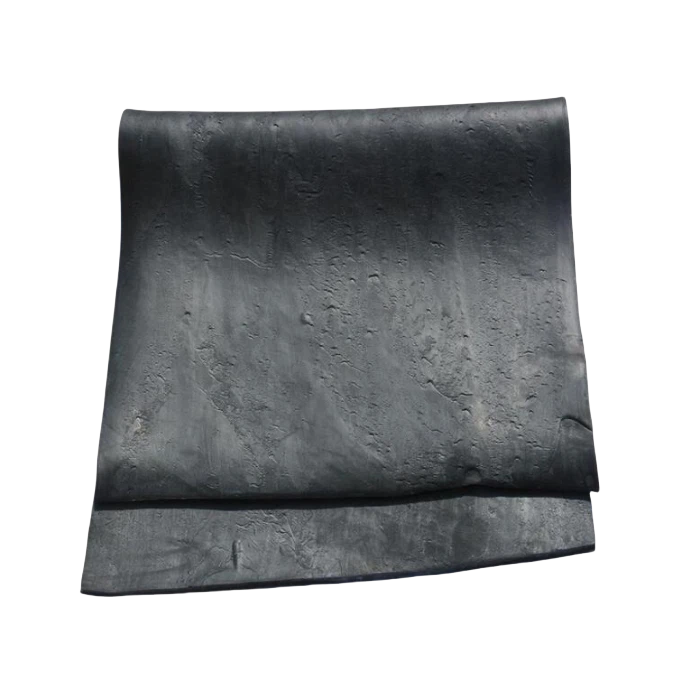
We provide customized NBR rubber manufacturing solutions to meet your needs. Main customizable options:
● Hardness
● Color
● Size
● Shape
● Tensile strength
● Elongation
● Surface treatment
● Nitrile content
|
TESTING ITEM |
UNIT |
SPEC |
|
Mooney viscosity |
- |
Customizable |
|
Tensile strength |
MPa |
≥ 10 |
|
Elongation at break |
% |
≥ 170 |
|
Hardness |
Shore A |
60 - 80 |
|
Storage temperature (finished product) |
℃ |
-50 ~ +30 |
|
Operating temperature (finished product) |
℃ |
+60 ~ +120 |
NBR Compound
Nitrile rubber is a synthetic rubber made by copolymerizing butadiene and acrylonitrile. It is a synthetic rubber with good oil resistance (especially NBR rubber alkane oil) and aging resistance. The acrylonitrile content (%) in NBR rubber is 42-46, 36-41, 31-35, 25-30, 18-24.
Our Company Has More Products to Offer, Please Browse the Product Categories on the Website, If You Have Any Needs, Please Contact Us.
|
Abrasion Resistance |
Good to Excellent |
|
Adhesion to Metal |
Excellent |
|
Adhesion to Rigid Materials |
Good to Excellent |
|
Compression Set |
Good to Excellent |
|
Flex Cracking Resistance |
Fair to Good |
|
Resilience / Rebound |
Good |
|
Impact Resistance |
Fair to Good |
|
Tear Resistance |
Good to Excellent |
|
Vibration Dampening |
Fair to Good |
|
Low Temperature Range |
-70º F to 0º F |
|
Minimum for Continuous Use (Static) |
-40º F |
|
Brittle Point |
-70° F to 0º F |
|
High Temperature Range |
+210° F to +250º F |
|
Maximum for Continuous Use (Static) |
+250º F |
● Excellent abrasion resistance
● Good rebound, tear resistance, and non-polar solvent resistance
● Good water and oil resistance.
● Good resistance to gas permeability
● Good elongation properties and excellent compression set resistance
● Adequate resilience and tensile strength
● Good resistance to aliphatic hydrocarbons
● Excellent adhesion to metal and rigid materials
● Excellent colorability
Raw Material Preparation
The initial step in NBR rubber production is the preparation of raw materials. The primary constituents are butadiene and acrylonitrile, two essential chemicals that form the backbone of NBR. These chemicals must be of high purity to ensure the quality of the final product.
Polymerization Process
The heart of NBR rubber manufacturing lies in the polymerization process. Polymerization of NBR is typically carried out through emulsion polymerization, where the raw materials are mixed in water with the aid of surfactants. Initiators are then added to promote the formation of NBR chains. This reaction is carefully controlled to achieve the desired properties in the rubber, such as its toughness and chemical resistance.
Finishing Techniques
Once polymerization is complete, the NBR rubber undergoes a series of finishing techniques to prepare it for commercial use. Initially, the rubber is coagulated and washed to remove impurities. Then, the NBR is dried and either baled or pelletized for shipment. These processes are essential to ensure the rubber has the correct consistency and form for further manufacturing.
|
Order quantity ≤ 3 tons |
The lead-time about 5 working days |
|
Order quantity 5~10tons |
The lead-time about 7-10 days |
|
Full container load |
The lead-time 15-20 days |
|
Packaging |
● 20 kg per carton ● 500 kg per pallet |
|
Transportation |
It can be delivered by truck, train, sea, air. |


(0/10)



