





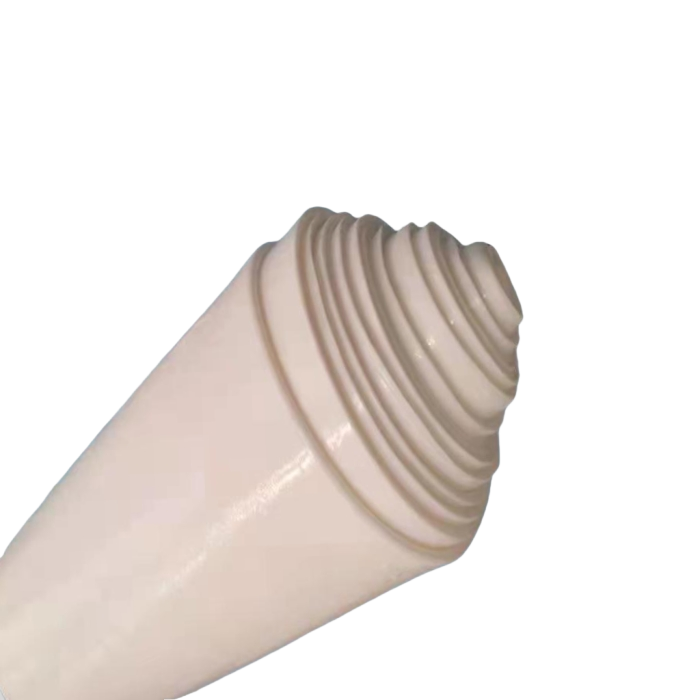
FVMQ Compound
FVMQ Compound are fluorosilicone rubbers produced in the process of chemical reactions involving the fluorination of methyl-silicone rubbers.

- Product Introduction
Crestmat is a leading rubber material and rubber product supplier in China. The factory has been devoted in special rubber compounding for more than 30 years. The products mainly include rubber materials like fluorosilicone (FVMQ), arylate rubber (ACM), Hydrogenated Nitrile (HNBR), fluoroelastomer (FKM) and rubber calendering products such as HNBR sheet, FKM sheet, fluorosilicone sheet and rubber extruded products such as fkm o ring cord, HNBR rubber cord, fkm profile and high quality ffkm oring. The products are widely used in aviation, automobile, petroleum, marine, semi-condutor and many other fields. The rubber compounding factory is well equiped with Japan-made banburies, two-roller mixers, reaction kettle, strainer; the rubber product factory is equiped with Rotocure machine, press machine, extruder. The lab is equiped with Rheometer, Hardness Testor, Elongation Testor, Rotary Viscosimeter, Biochemitry Incubator.
Why Choose Us
Advanced Equipment
The rubber compounding factory is well equiped with Japan-made banburies, two-roller mixers, reaction kettle, strainer; the rubber product factory is equiped with Rotocure machine, press machine, extruder.
Professional Team
FKM material is equiped with 3 production lines, one for precompounds, one for black compounds, one for colorful compounds. The maximum capacity for fluoroelastomer compound and polymer is 4800 tons per year.
Customized services
The rubber compounding factory is well equiped with Japan-made banburies, two-roller mixers, reaction kettle, strainer; the rubber product factory is equiped with Rotocure machine, press machine, extruder. The lab is equiped with Rheometer, Hardness Testor, Elongation Testor, Rotary Viscosimeter, Biochemitry Incubator.
High Quality
In our Reaserch and Development Certer, we have a leading laboratory equiped with a full sets of testing machinary. Here we can develop the new formulations and also test the rheological properties and physical properties for each batch of orders.


Fluorosilicone rubber base(FVMQ BASE)
► Excellent low temperature flexibility
► Excellent oil and fuel resistance
► Excellent chemical resistance

► Excellent low temperature flexibility
► Excellent oil and fuel resistance
► Excellent chemical resistance
► Great mechanical performance
What is FVMQ Compound?
FVMQ Compound are fluorosilicone rubbers produced in the process of chemical reactions involving the fluorination of methyl-silicone rubbers. Fluorosilicone rubbers are more durable than ordinary silicone vulcanizers and have better physical and mechanical parameters. Among other things, they are more resistant to tearing, permanent deformation under compressive force and have high durability to the action of mineral oils, propellants, and lubricants. In the presence of atmospheric factors, ozone and ultraviolet radiation, FVMQ Compound also behaves permanently.
Benefits of FVMQ Compound
Good electrical properties
It has good electrical properties and excellent resistance to weather, ozone and UV rays. It also has excellent compression set resistance and is very clean, with low odor and low taste.
Excellent thermal stability
The temperature range is between -50 °C/-58 °F and +175 °C/+347 °F (temporary up to +200 °C/+392 °F). Some formulations will work under high temperature situations up to 225°C giving it excellent thermal stability making it ideal for charge air cooler and turbo hoses.
Low physical strength
Low physical strength and abrasion resistance combined with high friction limit some applications for fluorosilicone and it typically has poor friction properties and poor abrasion resistance.
Prolong the life expectancy
Flurosilicone is an established material within automation hose manufacturing, specifically oil and diesel filler applications where batch sizes can vary. It can be incorporated into the design of any bespoke shaped hose to suit your unique application and to prolong the life expectancy of the hose.
Type of FVMQ Compound
Synthetic rubber
Synthetic rubber is an artificially produced material that imitates the desired properties of natural rubber. We are dealing with a polymer or artificial polymer, which means that it consists of long chains of repeating units called monomers (usually petroleum-based).
Vulcanised rubber
Vulcanised rubber is any type of rubber that has been cured by a process known as vulcanisation. By exposing the rubber to heat and sulphur, new cross-links are formed in the structure of the material. As a result, a stronger and more flexible rubber is produced.
CSM Rubber - Chlorosulphonated polyethylene
CSM rubber is a synthetic rubber based on polyethylene. It is also known as Hypalon, which is DuPont's proprietary trade name for CSM.
Neoprene rubber – CR rubber
Neoprene rubber is one of the oldest types of synthetic rubber. Compared to other types of rubber, it shows extremely low susceptibility to burning, corrosion and degradation. This makes it an ideal base material for adhesives and corrosion-resistant coatings.
Silicone rubber
Silicone rubber is a popular type of rubber known for its plasticity, biocompatibility and resistance to extreme temperatures, fire, ozone and ultraviolet (UV) radiation. It is available in both solid and liquid forms in a variety of colours.
FVMQ Compound finds diverse applications across various industries in Europe. In the automotive sector, it is utilized primarily for manufacturing seals, gaskets, and hoses due to its excellent resistance to fuels, oils, and high temperatures. Aerospace applications leverage FVMQ Compound for sealing critical components exposed to extreme environmental conditions and chemicals.
Within the electrical & electronics industry, FVMQ Compound is essential for producing insulation components and seals for cables and connectors, ensuring reliable performance under varying temperatures and exposure to oils and solvents. Industrial machinery applications benefit from FVMQ Compound's properties in seals, O-rings, and gaskets where resistance to lubricants and harsh operating environments is crucial. In the medical sector, FVMQ Compound is employed in manufacturing medical tubing and seals, meeting stringent regulatory requirements for biocompatibility and durability.
Curing Of Fluorosilicone Rubber
Peroxide curing
This typ of vulcanisation involves a radical mechanism with organic diacyl-, dialkyl-, oder diarylalkyl-peroxids. These peroxides splits at higher temperatures into high reactive peroxo-radicals with addition of the active peroxoradical on the double-bond of the polymer. As the the step follows a reaction of the free radicals by building up chemical crosslinks.
Addition curing with platinum catalyst systems
In this method the Si-H groups of the FVMQ are added to the double bonds of the vinyl groups of the polymer using a platinum catalyst, forming a three-dimensional network. The advantage of this method lies in the high curing speed, which can be controlled via the temperature. The addition curing of fluorosilicone, which produces no decomposition products, is one of the newest curing methods and is mostly used for liquid silicones.

High temperature resistance High temperature stability:
FVMQ Compound has excellent high temperature stability and can maintain the elasticity and mechanical properties of the material under extreme temperature conditions. Its temperature resistance range is usually -60°C to +200°C, or even higher. In contrast, general silicone rubber will harden and lose elasticity at high temperatures, while FVMQ Compound can maintain stable performance at higher temperatures.
Resistance to thermal oxidative aging:
It has good resistance to thermal oxidative aging. Thermo-oxidative aging refers to the phenomenon of oxidation and aging of rubber materials under the conditions of high temperature and the presence of oxygen. By adding special antioxidants and stabilizers, FVMQ Compound can effectively delay the occurrence of thermal oxidative aging and improve its service life in high temperature environments.
Low coefficient of thermal expansion:
The coefficient of thermal expansion is relatively low, which means that its size changes less at high temperatures. This feature is very important for seals that need to maintain dimensional stability at high temperatures to avoid leakage or failure caused by thermal expansion.
Excellent thermal conductivity:
FVMQ Compound has high thermal conductivity and can conduct heat from the sealed area to the surrounding environment faster. This helps lower the temperature of the seal in high-temperature environments, reduces the accumulation of thermal stress, and improves the stability and life of the seal.
Thermal shock tolerance:
FVMQ Compound has a strong ability to withstand thermal shock (rapid changes in temperature). In some applications, seals may frequently experience drastic changes in temperature, such as engine components, high-temperature fluid transfer systems, etc . Able to adapt to this transient high temperature change, maintain sealing effect and prevent leakage.
Application areas FVMQ Compound
Aerospace industry:
FVMQ Compound seals are widely used in key components such as engine seals, aviation fuel systems, hydraulic systems, and spacecraft seals in the aerospace field. Its resistance to high temperatures, oils and chemicals allows it to provide reliable sealing and protection under extreme working conditions.
Automotive industry:
FVMQ Compound seals are widely used in the automotive industry, especially in engine systems, transmission systems, fuel systems and braking systems. They are able to withstand high temperatures and chemicals, maintaining sealing properties while providing oil and flame resistance.
Medical devices:
FVMQ Compound seals are often used in the field of medical devices for chemical resistance, antibacterial and high temperature resistance sealing requirements. For example, it is widely used in sealing connections of medical equipment, sealing of pharmaceutical containers and sealing of medical syringes.
Petroleum and chemical industry:
FVMQ Compound seals are commonly used in the petroleum and chemical industry to seal equipment such as hydraulic systems, pipe connections, valves and pumps. Its resistance to high temperatures, oils and chemicals allows it to provide reliable sealing in harsh working environments.
Electronic and electrical equipment:
FVMQ Compound seals are used in electronic and electrical equipment to provide electrical insulation and sealing properties. They are commonly used in cable splices, electronic component packaging, battery sealing and other applications.
Points to note in the Production Process of FVMQ Compound
The main chain of FVMQ Compound is a -Si-O-bond structure: After the polar fluorine atom (such as trifluoropropyl) is introduced into the side chain, a -CH2CH2CF3 structure is formed. Since the fluorine atom has a large electron-withdrawing effect and the C-F bond is short, it can form a good shielding effect on the C-C bond, greatly improving the oil and solvent resistance of the rubber, making it an elastomer with good resistance to non-polar media at -68℃~232℃. Therefore, FVMQ Compound is widely used in the field of seals for high-end locomotives and military aerospace.
Transportation and storage of FVMQ Compound: During the storage and transportation of FVMQ Compound, it must be wrapped with isolation paper and plastic bags to prevent dust and impurities from contacting the rubber and being adsorbed.
Cutting of FVMQ Compound: In the process of collecting materials, cutting, and fluorosilicone rubber, the scissors or putty knives used must be cleaned first, and the surface of the tool must be wiped with alcohol. Only after it is clean can the fluorosilicone rubber be cut. During the cutting process, try to avoid contact between hands and skin and rubber, but do not wear gloves to avoid contamination of FVMQ Compound by glove fibers or skin oil.
Weighing of FVMQ Compound: Before weighing, the tray needs to be cleaned with alcohol.
Mixing of FVMQ Compound: Before mixing, the rollers and baffles of the mixing mill must be wiped with alcohol to ensure that there is no contamination by impurities. During mixing, attention should be paid to controlling the roller temperature. When the roller temperature is 18℃~28℃, the rubber mixing process performance is better. If it is necessary to add white carbon black to adjust the hardness, the white carbon black must be pre-treated with hydroxyl fluorosilicone oil.
Vulcanization of FVMQ Compound: The molds for making fluororubber products must be surface treated and chrome-plated. If necessary, an external release agent must be used.
Two-stage vulcanization of FVMQ Compound: After the first stage vulcanization of fluorosilicone rubber, there are a lot of low molecular weight volatiles, which will affect the performance of fluorosilicone rubber if used for a long time. Therefore, general fluorosilicone rubber products must be vulcanized in two stages: The second stage vulcanization of FVMQ Compound is carried out in an electric heating blower, and the temperature is gradually increased. After reaching the required temperature, the temperature is kept constant. Generally, molded products: 200℃×4~6h.
Retraining of FVMQ Compound: Fluorosilicone rubber that has been parked for a long time is easy to be structured, which affects the performance. Therefore, the use of rubber materials that have been parked for a long time needs to be retrained. Put it in the mixer and roll it 25 times. The mixing time is about 8 minutes to ensure that the materials are mixed evenly. If the surface is sticky to the roller, a post-scraper needs to be installed.
FVMQ Compound production environment: Since FVMQ Compound has the characteristics of electrostatic dust absorption, the production environment needs to be purified and dust-free. The production tools are special equipment. Workers need to wear clean clothes when entering and exiting the operation.
Our Factory
Crestmat is a leading high performance rubber material and rubber product supplier in China. The factory has been devoted in special rubber compounding for more than 30 years.


FAQ
Hot Tags: fvmq compound, China fvmq compound manufacturers, suppliers, factory, FKM Polymer, EPDM Rubber Sheet, General Molding Silicone, FVMQ Compound, hnbr rubber, FFKM Raw Rubber
You Might Also Like


