NBR Rubber Sheet
Nitrile (Buna-N, NBR, Nitrile butadiene) Rubber is a high quality sheet rubber designed for maximum oil resistance and general purpose industrial applications. Offered in 36 inch and 48 inch wide rolls, it can also be slit to width or custom cut to your specifications.

- Product Introduction
Crestmat is a leading rubber material and rubber product supplier in China. The factory has been devoted in special rubber compounding for more than 30 years. The products mainly include rubber materials like fluorosilicone (FVMQ), arylate rubber (ACM), Hydrogenated Nitrile (HNBR), fluoroelastomer (FKM) and rubber calendering products such as HNBR sheet, FKM sheet, fluorosilicone sheet and rubber extruded products such as fkm o ring cord, HNBR rubber cord, fkm profile and high quality ffkm oring. The products are widely used in aviation, automobile, petroleum, marine, semi-condutor and many other fields. The rubber compounding factory is well equiped with Japan-made banburies, two-roller mixers, reaction kettle, strainer; the rubber product factory is equiped with Rotocure machine, press machine, extruder. The lab is equiped with Rheometer, Hardness Testor, Elongation Testor, Rotary Viscosimeter, Biochemitry Incubator.
Why Choose Us
Advanced Equipment
The rubber compounding factory is well equiped with Japan-made banburies, two-roller mixers, reaction kettle, strainer; the rubber product factory is equiped with Rotocure machine, press machine, extruder.
Professional Team
FKM material is equiped with 3 production lines, one for precompounds, one for black compounds, one for colorful compounds. The maximum capacity for fluoroelastomer compound and polymer is 4800 tons per year.
Customized services
The rubber compounding factory is well equiped with Japan-made banburies, two-roller mixers, reaction kettle, strainer; the rubber product factory is equiped with Rotocure machine, press machine, extruder. The lab is equiped with Rheometer, Hardness Testor, Elongation Testor, Rotary Viscosimeter, Biochemitry Incubator.
High Quality
In our Reaserch and Development Certer, we have a leading laboratory equiped with a full sets of testing machinary. Here we can develop the new formulations and also test the rheological properties and physical properties for each batch of orders.

► Service temperature: -60 ℃~240 ℃
► Hardness: 60±5, Shore A
► Thickness: 0.5 mm~20 mm

► Service temperature: -30 ℃~160 ℃
► Hardness: 70±5 Shore A
► Thickness: 0.5 mm~20 mm


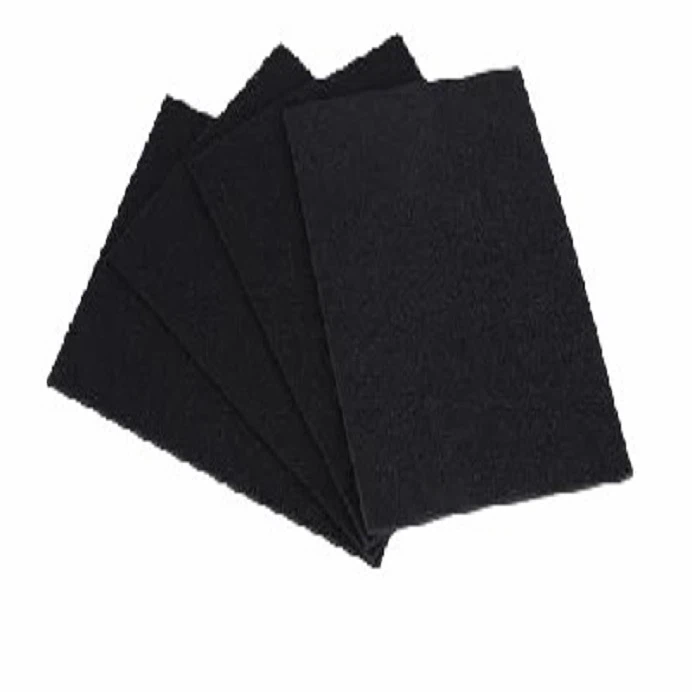
► Good sound absorption
► Excellent shock resistance
► Excellent thermal insulation
► High compressive and elastic
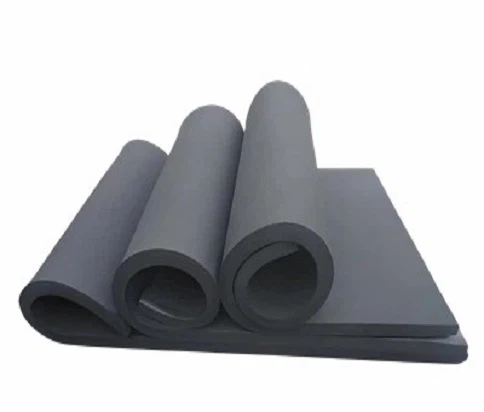

► Excellent low temperature resistance
► Excellent high temperature resistance
► Electrical insulation, Great aging resistance, Good radiation resistance, Great oxidation resistance, Good mechanical strength
what is NBR Rubber Sheet?
NB rubber sheet is widely used in oil & Fuel resistance gaskets and sealings, oil tank floating blankets etc They can withstand exposure to many industrial chemicals, making them suitable for applications in chemical processing and related industries. It also displays a good resistance to inorganic chemical products except antioxidant agents and chlorine. . Its recommended operating temperature range is -30° C to + 120° C.
Nitrile (Buna-N, NBR, Nitrile butadiene) Rubber is a high quality sheet rubber designed for maximum oil resistance and general purpose industrial applications. Offered in 36 inch and 48 inch wide rolls, it can also be slit to width or custom cut to your specifications.
Benefits of NBR Rubber Sheet
Vital Industrial Applications
NBR rubber sheet are crucial in a range of industries, such as manufacturing, automotive, and construction, where they are used for insulation, vibration reduction, and sealing, ensuring smooth operations and enhanced safety.
Environmental Protection
NBR rubber sheet provide a barrier against moisture, chemicals, and temperature variations, safeguarding equipment and structures from corrosion, leaks, and degradation, thereby extending their lifespan.
Noise and Vibration Control
In automotive and machinery settings, NBR rubber sheet effectively absorb vibrations and reduce noise levels, enhancing comfort for users and minimizing wear and tear on equipment. Hygiene and Healthcare: NBR rubber sheet find use in medical environments, functioning as protective
Versatile Customization
Available in various thicknesses, sizes, and compositions, NBR rubber sheet can be tailored to specific needs, enabling cost-effective solutions for diverse applications, from industrial machinery to household appliances.
Type of NBR Rubber Sheet
Natural rubber sheets
They are characterized by excellent dynamic, rebound, elasticity and mechanical properties. These sheets are great for use as general sealing materials. They are most widely used in the market, as they are applicable in any environment without specific requirements.
EPDM rubber sheets
They have good resistance to acids, alkali and ketones and hence they are used for outdoor and high zone environmental applications.
Neoprene rubber sheets
These sheets offer good resistance to petroleum products, oil, flame, acids and alkalis. They are used in industrial applications as corrosion resistant coatings, padding in external metal cases to protect the contents, noise isolation in power transformer installations and other electrical applications.
Nitrile rubber sheets
They are specially designed for high resistance to oil and solvent products and therefore they are used in making electrical transformers, for sealing, in food industry and also in special application for dielectric oils for electrical installations and equipment. Moreover, they are often used between flanges and similar joints subjected to fluid or air pressure.
Silicone rubber sheets
They are widely used in pharmaceutical industry as they are resistant to high temperature and have low permeability. Also, these sheets have extreme tendency of resisting weather ageing, ozone and chemicals.
Fabric reinforced rubber sheets
This type of sheets is made by Natural or Synthetic rubber. Here one or more layers of fabric are reinforced to render strength against high pressure. That is why this type of rubber sheets has wide usage in high pressure spots.

Nitrile rubber sheeting (NBR) can play a significant role in wide ranges of applications that provide high resistance against engine oil and gasoline. It is a synthetic material having moderate mechanical properties, which is widely used in industrial areas. The Nitrile rubber sheet is manufactured from a copolymer of ACN (acrylonitrile) and butadiene. This kind of rubber sheet is highly suitable for the oil and gas industries.
The acrylonitrile content present in the rubber sheet promotes the resistivity against oil and gas. The demand for the nitrile rubber sheet is on the increase today.
The Properties That You Need To Know About Nitrile Rubber Sheet Among the wide varieties of NBR rubber sheet, nitrile sheet is widely used due to its incredible oil resistance. There are some appreciable properties have been present in the nitrile rubber sheet such as 70 degrees of hardness and the temperature range lying in between the -15 degree Celsius to +90 degree Celsius. The nitrile NBR rubber sheet are highly consumed for industrial applications. The hardness options and extensive temperature range seen in the nitrile rubber sheet are not found in any other products.
This is an interesting question. Though there is a significant difference in the way both are produced, and in the ideal application of each, one is not necessarily better than the other. Both are polymers, which are substances made up of large molecules composed of many repeated sub-units. Each display highly valued properties and are used in many industrial and household applications.
The first, most obvious, difference between natural rubber and nitrile rubber is source.
Natural rubber is made from the sap of trees, called Heveabrasiliensis, which grow on plantations in South America and South Asia. The sap, a sticky, milky liquid, is harvested through a process called tapping where incisions are made in the trees causing natural latex to trickle into containers. Because It is a natural product and ecologically friendly, it is the perfect material for environmentally-conscious consumers. Though it is an important raw material and used in many industries, natural rubber can be difficult to process.
Another difference is product consistency.
There is no variation in natural rubber. It is generally all harvested and processed the same way, which produces the same product universally. Natural rubber is generally more-supple than other rubber types and can be used in a variety of forms. It is ideal for use in wiper blades, machine skirting, and even as drum practice pads. It is also used to make tires, gloves, and rubber mats.
Natural Rubber Properties
Despite having highly valued properties, natural rubber demonstrates poor resistance to atmospheric oxygen, ozone, oils, and various hydrocarbon solvents. In addition, natural rubber products do not have the same high levels of chemical and temperature resistance as nitrile rubber. This is because synthetic rubbers, in general, are engineered to include certain properties, such as resistance to specific substances, whereas natural rubber is a product which has been derived from nature. In terms of industrial uses, natural rubber is more suited for light to medium grade applications that do not involve overly abrasive temperatures and chemical conditions. When you think of natural rubber, think rubber bands – no other product has elongation like natural rubber. Natural rubber is also used in wiper blades and machine skirting.
Nitrile Rubber is a Man-Made Polymer.
By way of contrast, nitrile rubber, also known as NBR or Buna-N, is a man-made polymer produced under controlled conditions. It was developed during World War II in response to a growing need for oil-resistant rubber that could serve as a more durable alternative to natural rubber. It is produced using petroleum-based materials, and is a synthetic rubber copolymer of acrylonitrile (ACN) and butadiene. This means that it is not a natural product and its production can have some detrimental effects to the environment. Despite this, the demand for nitrile rubber continues to grow.
Nitrile Pubber Properties
NBR has properties that make it an excellent solution for sealing applications. Unlike natural rubber, it has a superior level of resistance against synthetic and natural grease products and is highly recommended for use in areas where petroleum products are present. It can be used to provide long-lasting machinery components which might be exposed to fuel or lubricants. In commercial kitchens, it is common for cooking oil or food grease to spill or splatter. Nitrile rubber sheeting ensures that kitchen products will remain effective longer. Nitrile sheets can also be used in laboratories, where spills of caustic agents are likely. It can be found in disposable non-latex gloves, automotive transmission belts, hoses, O-rings, gaskets, oil seals, V belts, synthetic leather, printer's form rollers, and as cable jacketing; NBR latex can also be used in the preparation of adhesives and as a pigment binder.
NBR Rubber Sheet Density
Nitrile rubber sheet,a material widely used in various industries,has attracted widespread attention for its properties and performance.Among them,the density of nitrile rubber sheet is one of the important factors that affect its application range and performance.This article will provide a detailed introduction and analysis of the density of nitrile rubber sheet to help you better understand this material.
Nitrile rubber is a synthetic rubber made by copolymerizing acrylonitrile and butadiene monomers.It has good oil resistance,wear resistance,and aging resistance,so it has widespread applications in many fields,such as automobile manufacturing,petrochemicals,and electronics and electrical appliances.Nitrile rubber sheet is the processed sheet of nitrile rubber with a certain thickness for use in various equipment and parts.
The density of nitrile rubber sheet is 1.5±0.05 g/cm3.For nitrile rubber sheet,the size of its density directly affects its weight,hardness,elasticity,and other physical properties,and consequently affects its performance in actual applications.
Sometimes we may need higher or lower density nitrile rubber sheet to meet specific application requirements.In this case,we need to adjust the density of nitrile rubber sheet.The following are the main methods for adjusting the density:
Changing the raw material formula: By increasing or decreasing the proportion of certain components,the density of nitrile rubber can be changed.For example,increasing the filler content can increase the density,while reducing it can lower the density.
Changing the production process: Different production processes can affect the density of nitrile rubber sheets.
For example,using high-pressure molding technology can produce products with higher density,while low-pressure molding technology can produce products with lower density.
Changing the usage environment: The density of nitrile rubber sheets can also be affected by the usage environment.
For example,in high-temperature environments,the density of nitrile rubber sheets may decrease;while in low-temperature environments,its density may increase.
What is the maintenance method of NBR rubber sheet? Rubber plate itself has a certain weight, has a good grip, can be directly attached to the ground, generally do not need glue fixed. The joints can be cut into 45 degrees of slope with wallpaper knife. No obvious gap can be guaranteed through alignment and joint stitching, which does not affect the beauty and normal use of insulation glue.
Insulation pad should avoid direct sunlight or sharp metal scratches, storage should avoid and heat source distance too close, to prevent worsening aging deterioration, so as to reduce the insulation performance.
In use, the ground should be flat, no sharp hard objects. And in the process of use found cracks, scratches, thickness reduction and other insufficient to ensure the insulation performance, should be replaced in time.
The insulating rubber pad should be kept dry and clean, and should be prevented from contacting with acid, alkali and various oils to avoid aging, cracking or stickiness after corrosion, thus reducing the insulation performance.
In the process of use, the ground should be flat, no sharp hard objects, rubber plate laying, rubber plate joint should be smooth, there will be no crimping phenomenon, to prevent operators from falling during equipment inspection or parking operations. Such as cracks, scratches, thinning thickness is not enough to ensure the insulation performance, should be replaced 5 mm NBR rubber sheet in time, avoid direct sunlight or metal sharp piercing, storage to avoid close to the heat source, so as not to occur aging and deterioration, reduce the insulation performance.
The insulating NBR rubber sheet should be kept dry and clean. Pay attention to preventing contact with acid, alkali and various oil substances, so as to avoid aging, cracking or corrosion after insulation or viscosity reduction. The 6 mm NBR rubber sheet should be cleaned with soap and dried with talcum powder at a temperature of not more than 65 ℃. If the insulating pad is coated with tar and paint, immediately wipe the contaminated area with an appropriate solvent. Avoid excessive use of solvent gasoline, paraffin and pure alcohol for cleaning, which can be used to clean tar and paint. Wet NBR rubber sheet should be dried accordingly, drying temperature should not exceed 65 ℃.
Differences Between Soundproof NBR Rubber Sheet and General Rubber Sheets
Many people often think that using general rubber sheets can be used to replace soundproof rubber sheets. But in reality Using ordinary rubber sheets does not have good results in reducing the sound even slightly. Because these two types of rubber sheets are different in many ways, and these are the 3 differences between soundproof rubber sheets and general rubber sheets.
Functionality
Soundproof rubber sheet It is a NBR rubber sheet designed to reduce or block the transmission of sound. Whether blocking the transmission of sound from the inside to the outside or blocking sound from the outside from entering the inside, suitable for use in various applications. that require noise control, such as home theaters, recording studios industrial area and residential buildingsGeneral rubber sheet There is more variety. Popularly used in industrial applications such as gaskets, seals, rubber floor mats. Rubber mats for machinery, etc., are not primarily designed to block sound.
Production formula
Soundproof NBR rubber sheet It is a rubber sheet that has been developed with a specific formula. It has a very high density. To reduce the transmission of sound as much as possible It has a hardness of 80 Shore A and is more than 2 times heavier than general rubber sheets when compared to the same thickness.
less Time
Soundproof NBR rubber panels are engineered to reduce sound transmission. Excellent sound absorption Whether the sound from outside comes inside or the sound from inside goes outside. It is also a heat insulator to help control the temperature. Resistant to moisture It's not moldy.
General rubber sheets are not designed to be soundproof as their primary function. Although there may be some level of sound reduction. But they are not as effective as specially designed rubber soundproofing panels.
Our Factory
Crestmat is a leading high performance rubber material and rubber product supplier in China. The factory has been devoted in special rubber compounding for more than 30 years.


FAQ
Hot Tags: nbr rubber sheet, China nbr rubber sheet manufacturers, suppliers, factory, FKM Rubber Sheet, rubber sheet, SBR Rubber Sheet, EPDM Rubber Sheet, SPONGE Rubber Sheet, Silicone Rubber Sheet